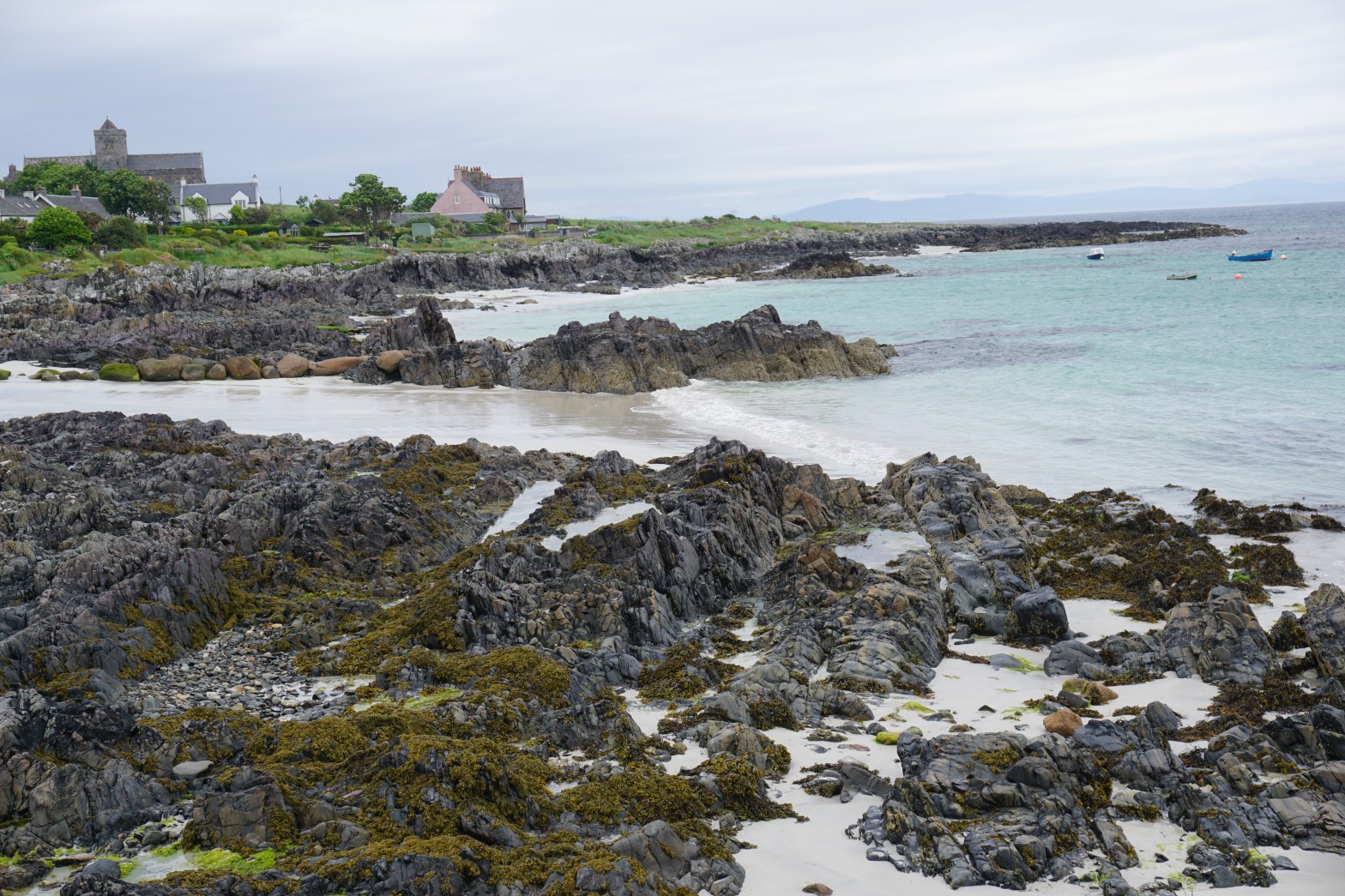
After an arduous journey, when you finally eye the sugar-white sands and teal glassed water of Iona, you would be forgiven to think that you were somewhere far more exotic than within the Paisley postcode.
It’s neither quick nor easy to get to Iona: an island, off an Island, off an Island. Iona is a small island in the Inner Hebrides, on the west coast of Scotland laying just off the southwest of the Isle of Mull. There is a reason why this three-mile-long island with a population of one hundred thirty sees roughly 130,000 visitors every year.
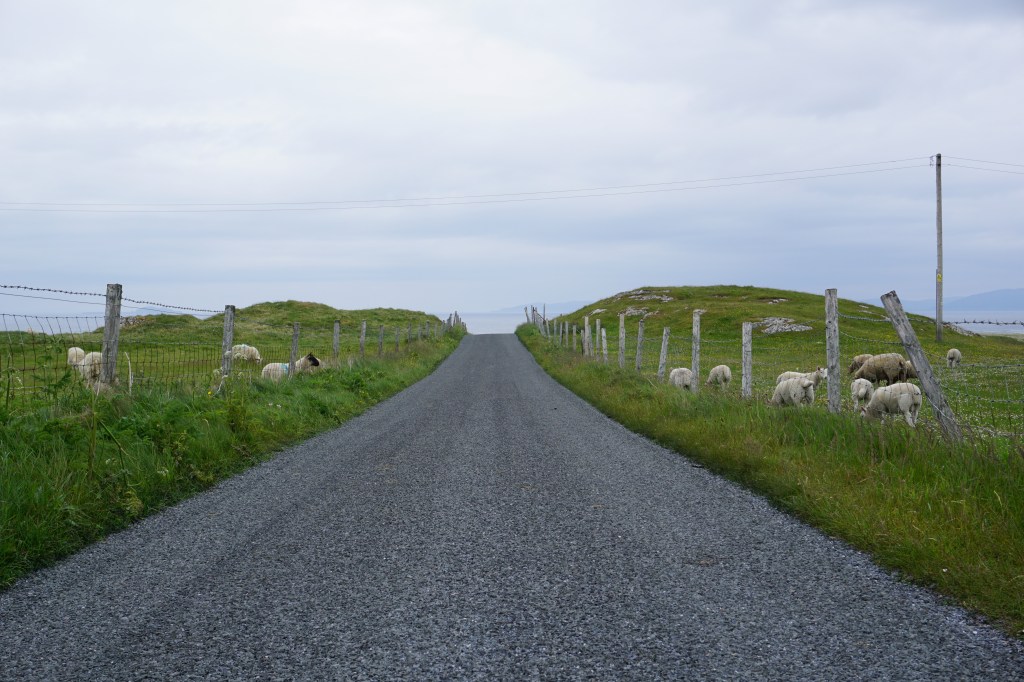
Stepping onto the shore of Iona there is a notable alteration from Mull. The roads surface, I notice are not tarmac but more gravel-like. It’s insignificant for a non-driving visitor but it seems symbolic, tangible evidence of the perceived difference. Iona is quieter, greener, fresher. There are not many places where you can sip a locally distilled gin whilst the next table over a nun enjoys afternoon tea.
On Iona, you are never far away from a sheep, a constant murmur of ‘baa’ follows you wherever you are on the island. The weather on the island is inconsistent and worth considering when planning activities.
The Birthplace of Christianity in Scotland
Iona is said to be Scotland’s most sacred place. St Columba and his monks arrived on the island in the year 563 bringing with them Christianity from Ireland to Scotland. Once settled on the Island, St Columba and the monks founded Iona Abbey, which has attracted Christian pilgrimages ever since. The book of Kells was said to have been produced by monks on the Island. The abbey has seen many forms over the years, today the Abbey is maintained by Historic Scotland and open to visitors. Currently, visits are by guided tour and booked in advance online. St Columba is buried on the island within the Abby grounds along with several medieval monarchs including Macbeth. For tickets and more information: Iona Abbey and Nunnery | Historic Environment Scotland | HES
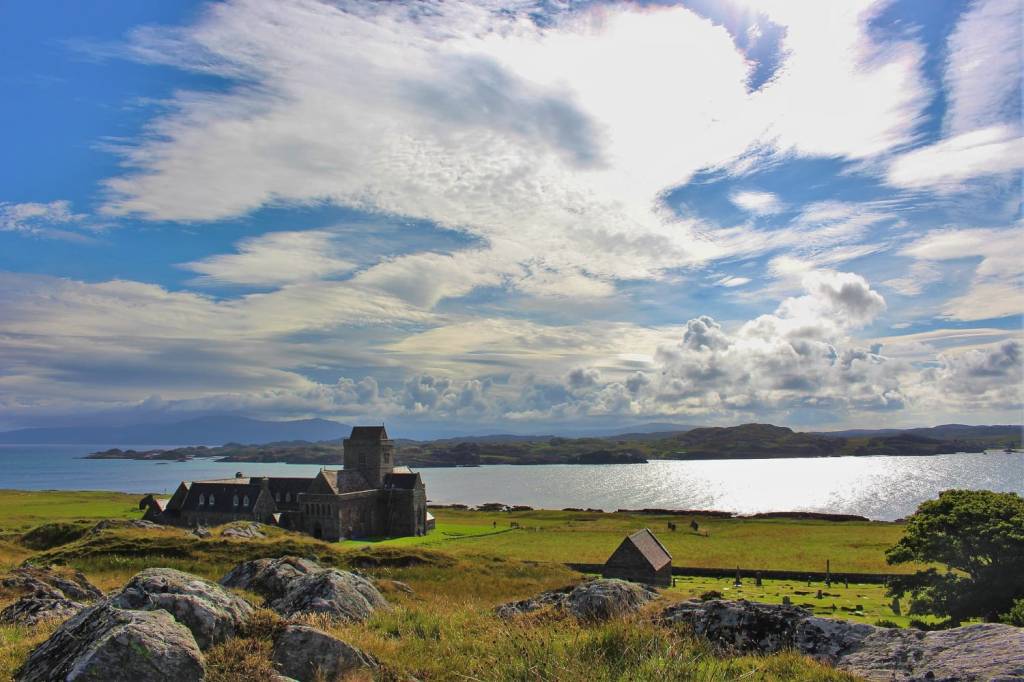
Iona Abbey (photo credit @notcarolyn unsplash.com)
To get to the abbey from the ferry walk straight ahead through the village (Baile Mor) and turn left, keep walking on the North road and you will find the Abbey on your left. Don’t skip the village entirely: pop into one of the local shops to get a unique craft souvenir or indulge in afternoon tea at the Argyll Hotel on the waterfront.
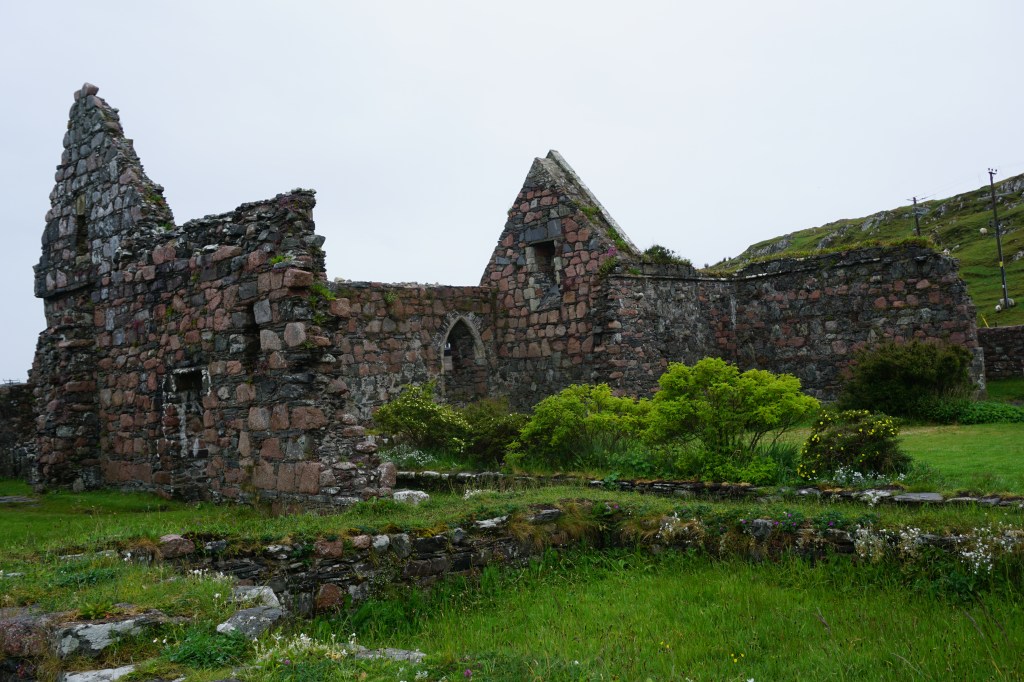
En route to the abbey, you can also take a scenic path via the nunnery. Admission to the nunnery is free and open year-round. The nunnery was established in the 12th century but left to ruin after the reformation. The convent was one of two Augustinian nunneries in Scotland and was active for more than 350 years. A plaque at the nunnery gives some insight into who the nuns were: “Many nuns came from noble families. The convent provided refuge for unmarried daughters, widows, illegitimate girls and estranged wives. Far from leading lives of poverty and seclusion, these women had daily contact with the outside world.”
The land, The Beaches
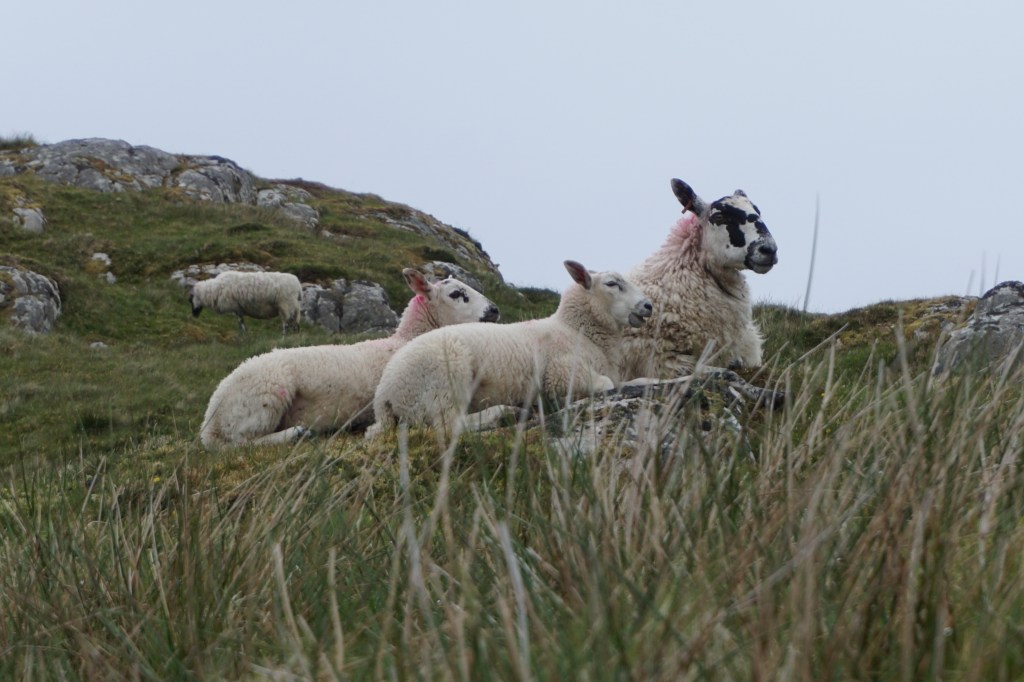
Iona’s highest point is Dun I (‘The Hill of Iona’ in Gaelic) standing at 101 metres above sea level. The climb to the top is a relatively simple walk but there is no well-defined path to the summit and the terrain underfoot is uneven so wear sturdy shoes. As you hike up you will undoubtedly encounter several, if not dozens of sheep. As with most animals, the sheep will keep themselves to themselves if you also do so. They will happily ‘baa’ some encouragement as you trek by and pose majestically as they stare out onto the Atlantic.
From the top of the hill even on a cloudy day you can get a good view of the rest of the island and find your bearings. The Abby and Mull are visible to the East, the white sandy beaches to the north. On a clear day, you can see the islands of Coll, Tiree and the Treshnish and even as far as Ireland!
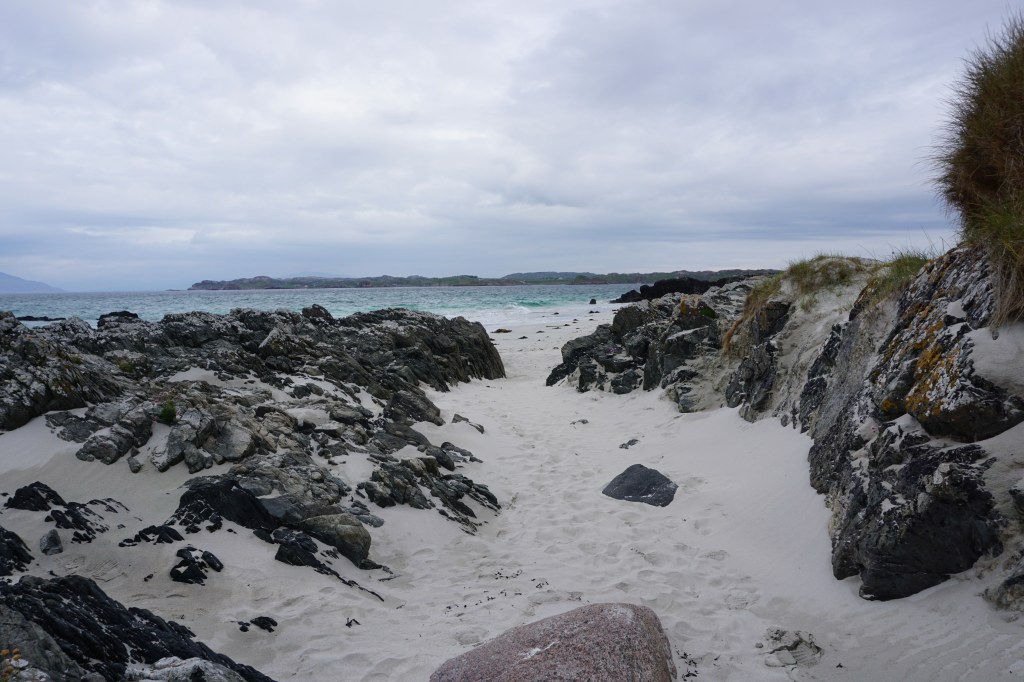
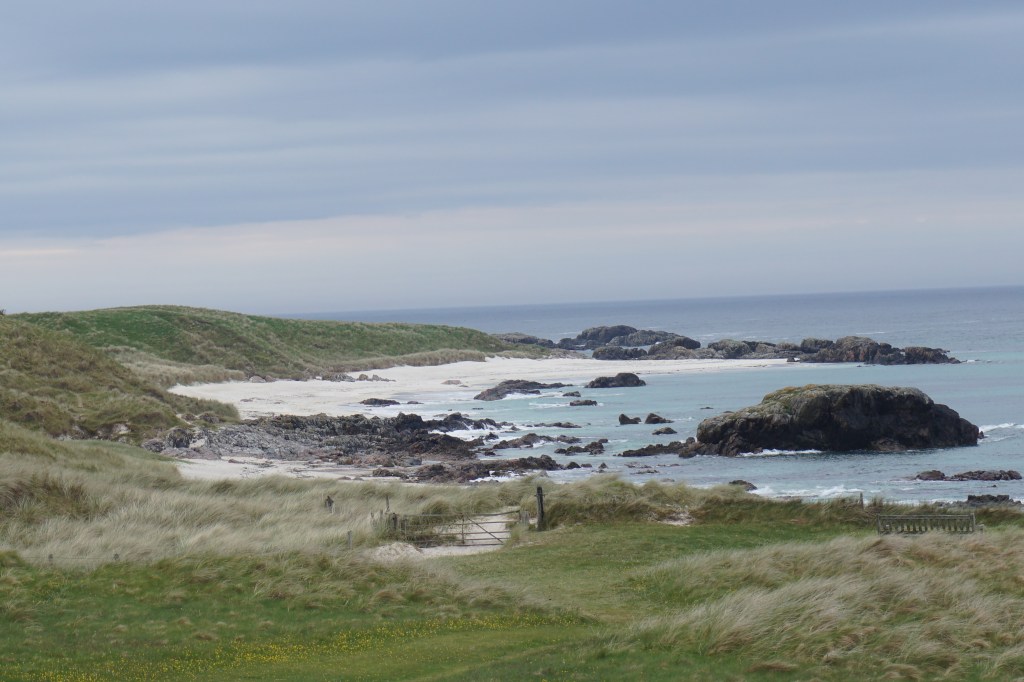
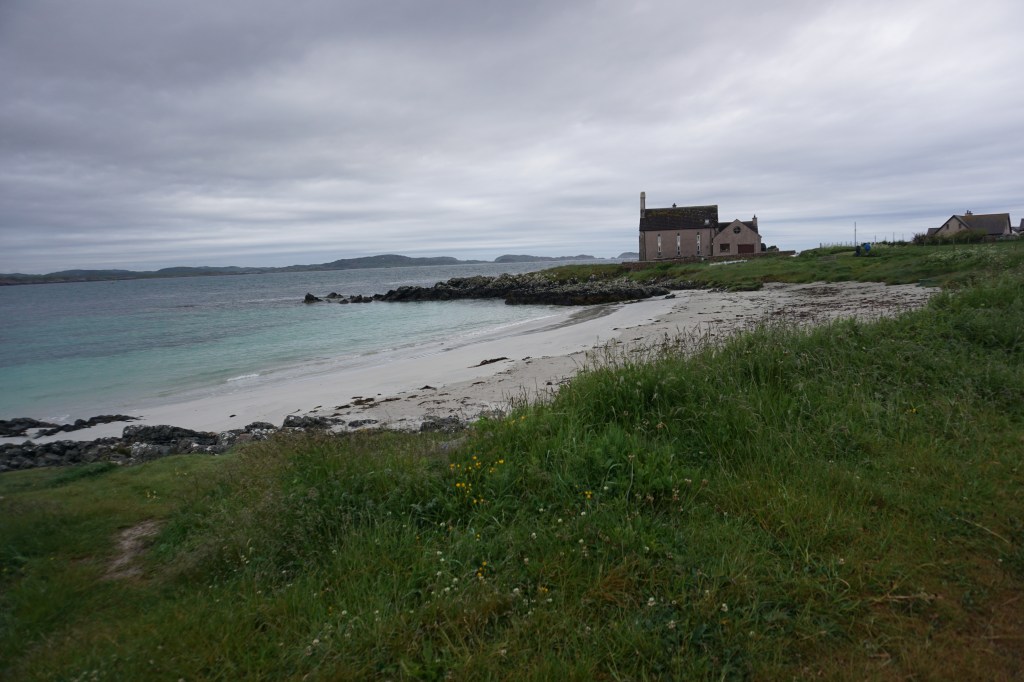
Iona’s beaches are some of Scotland’s finest and could easily dupe you into thinking you were somewhere with a tropical climate with their white sands and translucent water. On the northeast shore, you will find the white strand of the monks (Traigh Ban Nam Manach). From this stretch of sand, you can get an excellent view across the Sound of Iona onto Mull. This vista point was an inspiration for Scottish colourist Peploe.
On the south coast of the island, you will find St Columba’s Bay, a pebble beach where St Columba was said to have arrived on to Iona. When walking to the bay, take the path from the West coming from The Machair across the golf course and past Loch Staonaig. Do not take the path coming from the easterly side of the island heading south towards Marble Quarry unless you want to replicate an experience likely close to that of St Columba’s venture on the island through thick boggy marshland with no defined path. At the bay, tear dropped shaped marbles can be found. These are known as St Columba’s tear. It is thought that carrying one of these marbles in your pocket will protect you from drowning.
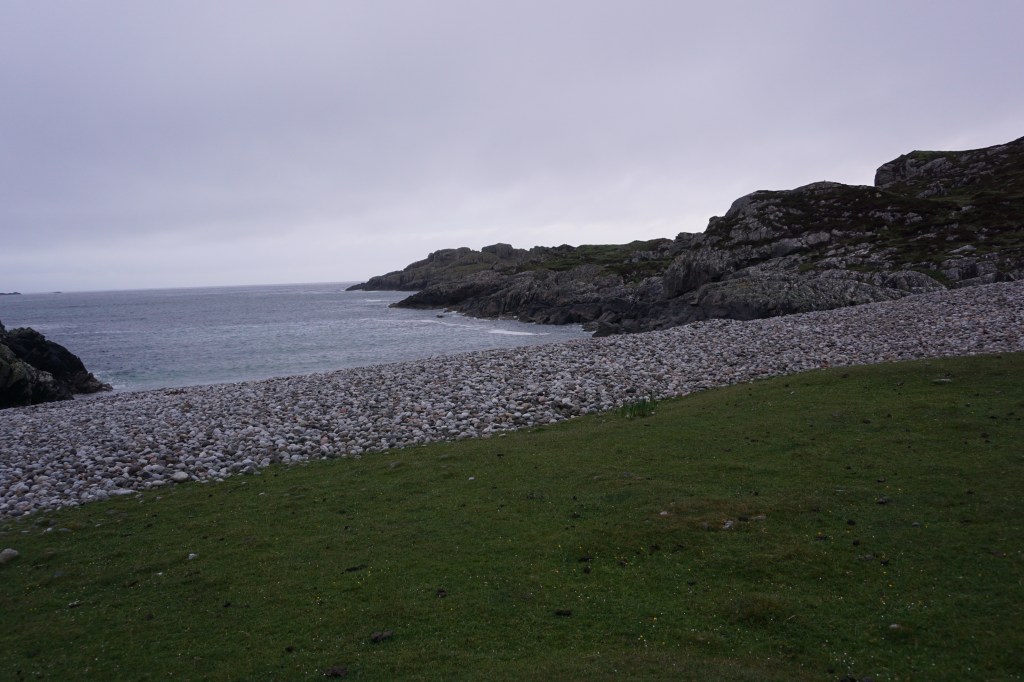
The island sees a flurry of visitors yet manages to maintain its tranquillity. Whilst the village and roads to the abbey can feel like a theme park when chalked full with tour groups, there are parts of the south coast where you can walk for hours and the only living being you come across is a Corncrake and of course, a plethora of sheep. Many have said that there is a spirituality surrounding the island. Now whether this thought has been implanted before your visit or not it seems impossible not to feel some sort of a presence. Whether it’s rooted in spirituality, mythology or even just the atmosphere, Iona does have a special presence that will imprint itself and linger with you and certainly will come to mind next time you hear a sheep.
A great source to help you plan your trip and on all things Iona: Isle of Iona – Home (welcometoiona.com)
How to get to Iona?
From the mainland take the ferry from Oban to Craignure, Mull. Currently, tickets need to be booked in advance online.
Journey time: Approx. 50 mins.Check-in closes 10 minutes before departure.
Price: Adult Return Foot Passenger £7.60. Returns are valid for a month.
For more information, all ticket details and up to date timetables: Ferries to Scotland & Scottish Isles | Caledonian MacBrayne | CalMac Ferries
From Craignure you can either drive or take the bus to Fionnpfort. Please note you cannot take your car on the Iona ferry, although there is parking at Fionnphort Ferry terminal.
Bus details: Journey time: Approx. 1 hour 20 minutes. Price: Adult Return £17.00. Returns are valid for a month.
For more information, all ticket details and up to date timetables: West Coast Motors – Bus Tour Operator – Argyll, Scotland
Ferry to Iona
Journey time: 10 minutes Price: Adult Return £3.60. Returns are valid for a month. Tickets can be purchased on board.
For more information, all ticket details and up to date timetables: https://www.calmac.co.uk/article/7817/Iona-Fionnphort-Iona
 Lucette Wood