

Seals nonchalantly eye the boat, as we pass by in the sound of Iona, as they laze on an open jut of rock. The boat quickly cruises away from Mull, away from the seals, away from Iona and into the Atlantic Ocean. Once ocean-bound, a school of bottle-nose dolphins, catching waves.

When first approaching the isle of Staffa, the vista is somewhat perplexing. The expectation of the glorious cave is briefly faltered from the first impression. Staffa, looking skewwhiff as if a giant squished the island underfoot (more on giants later) and grew a mossy flock of hair on top as it matured.
Staffa lies west of the Isle of Mull in Scotland’s Inner Hebrides. The island is uninhabited (by humans) and the only way to get there is via a private tour. These tours are reasonably priced and leave from both Iona and Fionnphort, Mull. The Atlantic is rough, only on calm days can the tourist boats dock on the island. Even the most tranquil summer days onshore can be rough out here.
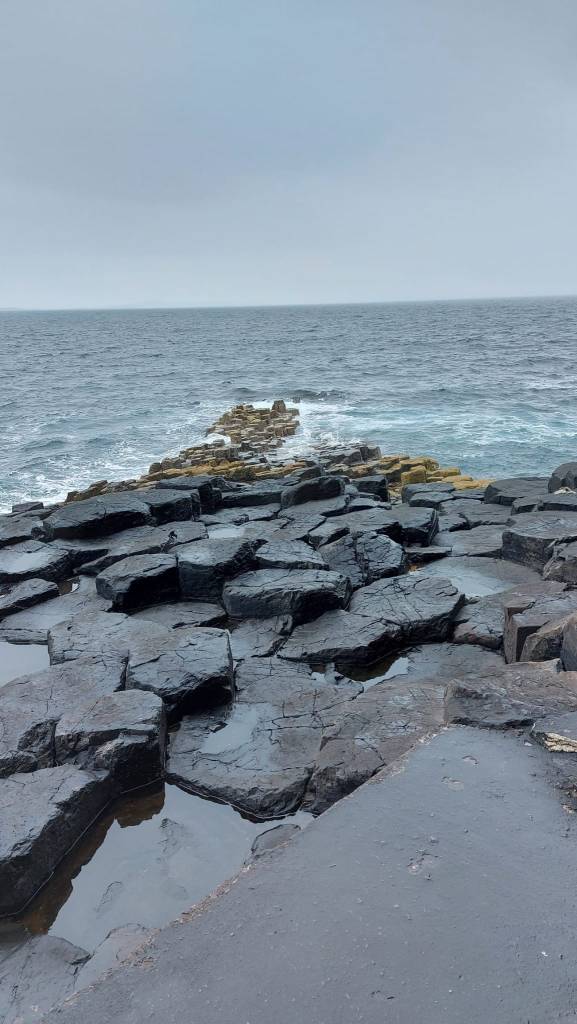
The boat docks to the southeast of the Island. Once on land, you can either climb up the ladders to head north or turn left, follow the coast to the cave on the south.
Walking to the cave is an arduous task. Whilst the path is well maintained, the vicious swell of the Atlantic’s waves is a continuous threat. A roped railing leads the way from the docking point to inside the mouth of the cave. Even with good gripped shoes, you may still slip, holding onto the railing and keeping close to the wall is advised.
Ownership of the Island has changed many hands since it was first discovered in the 18th century. Since 1986 the Island has been under the care of the National Trust for Scotland. The name ‘Staffa’ coming from the old Norse for ‘pillar island’.
How was Fingal’s Cave formed?
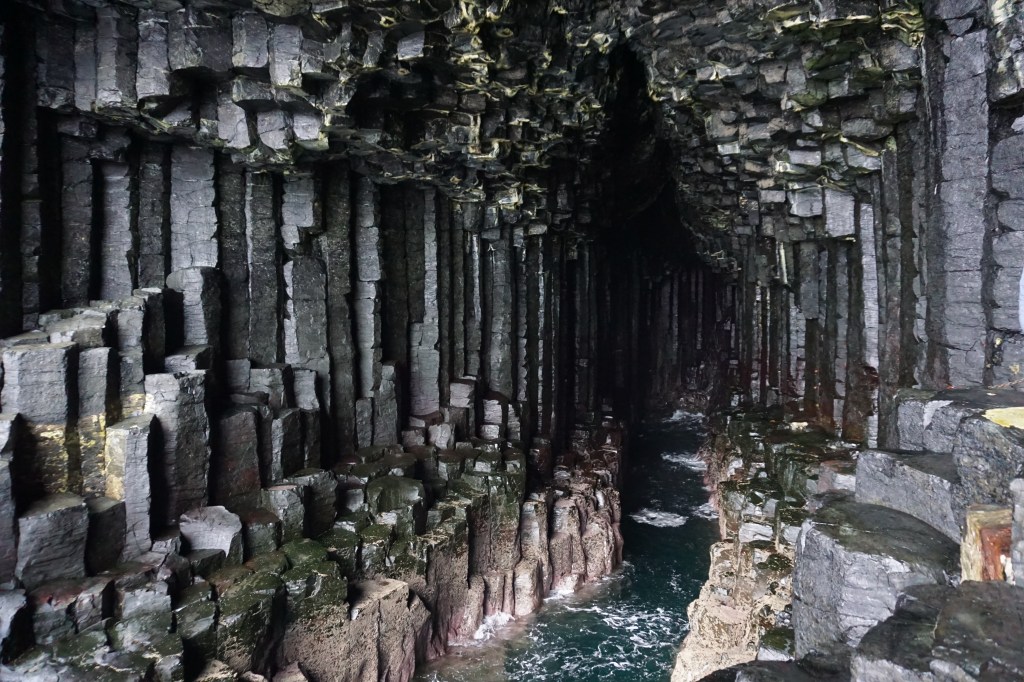
Fingal’s Cave is a sea cave formed of basalt rock and is famed for its unusually hexagonal columns and pillared walls. The cave is grand, not only in shape but also in stature, standing roughly 69 metres high and 12 metres wide.
Inside the cave, setting my eyes on the hexagon formation roof I am awestruck by the complexity. It’s a cubist interpretation of a cave. Just how is this natural? How did nature create something with such organisation and perfected shape?
The columns in the cave were formed by lava meeting the sea flowing down from the now dormant Ben More on the Isle of Mull in the Paleogene period some 60 million years ago. The same type of lava flow created the Giant’s Causeway in Northern Ireland.
The similar formations found at Giant’s Causeway led the way for folklore to connect a path between the two. The myth says that Irish warrior, Fionn Mac Cumhail built the causeway as steppingstones so he could walk to Scotland to fight Scottish giant, Benandonner. The James Macpherson epic poem ‘The Fingal of Ossian’ of which the cave gets its name is based on this myth.
Described by Wordsworth as ‘tuneful’; The acoustics inside the cave is unique, as it amplifies the sounds of the ferocious Atlantic waves. The sound inspired German composer Felix Mendelsohn to compose his Hebrides overture.

Puffins on Staffa
The pillared cave is the first image that the mind conjures up when thinking about the Isle of Staffa, but the cave isn’t all the island has to offer. The North East cliffs are home to a colony of Atlantic Puffins who steal the show.
From the docking point, climb up the stairs onto the top of the island. Follow the well-trodden path across the wild flowered grass to a pink bollard which is the prime puffin spot.

The Puffins come to the island during their breeding season between April and August. The seabirds are incredibly cute, abundant and don’t seem bothered by the presence of humans at all. It is almost as if they crave the attention of humans and know that they are on poseur duty. The more people who arrive; the more puffins came into land.
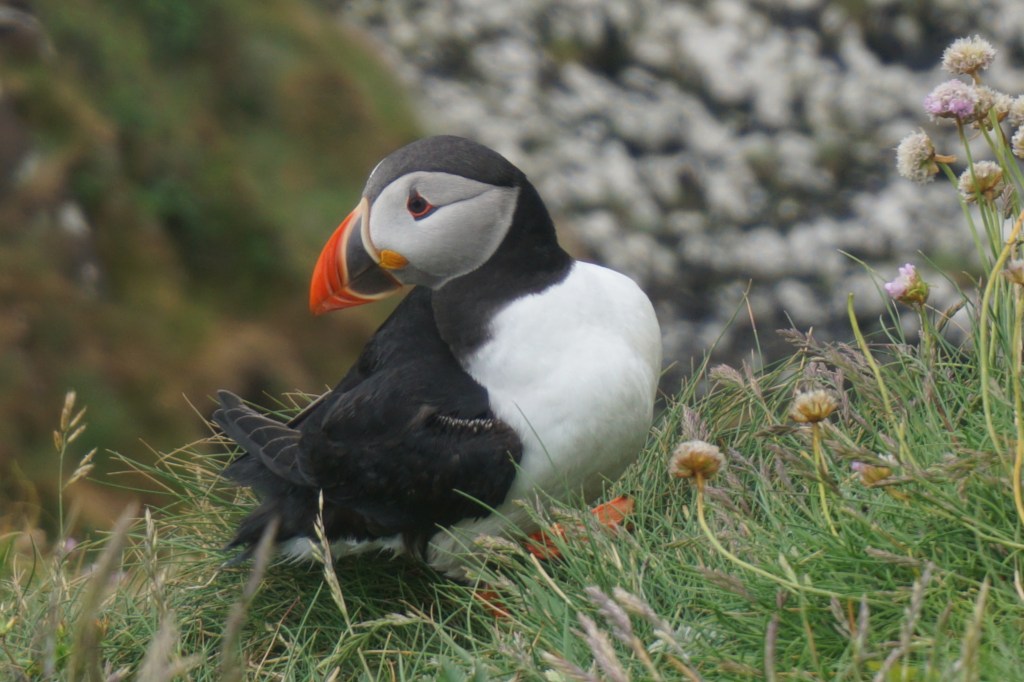
Pictures don’t do these birds justice, yet all anyone can do in their presence is attempt to do so. The birds are surprisingly tiny. Bobbing their heads in and out of their cliffside burrows almost incognito until your eye catches an orange splash.
With their clown-like faces, cartoonish figures of beaks too large for their bodies these beautiful sea birds are often referred to as ‘clowns of the sea’. Their routine: adorable comical landings, a sort of waddle hover mid-air with feet propped forward.
Whilst puffins are plentiful on Staffa and other sea cliffs throughout the UK; unfortunately, Puffins are on the red list of endangered UK birds. The RSPB says the UK is home to ten per cent of the world’s Puffin population. Puffins are at risk due to environmental changes affecting breeding habits and the fish they feed on. Predators such as minks and cats are also a threat on the ground.
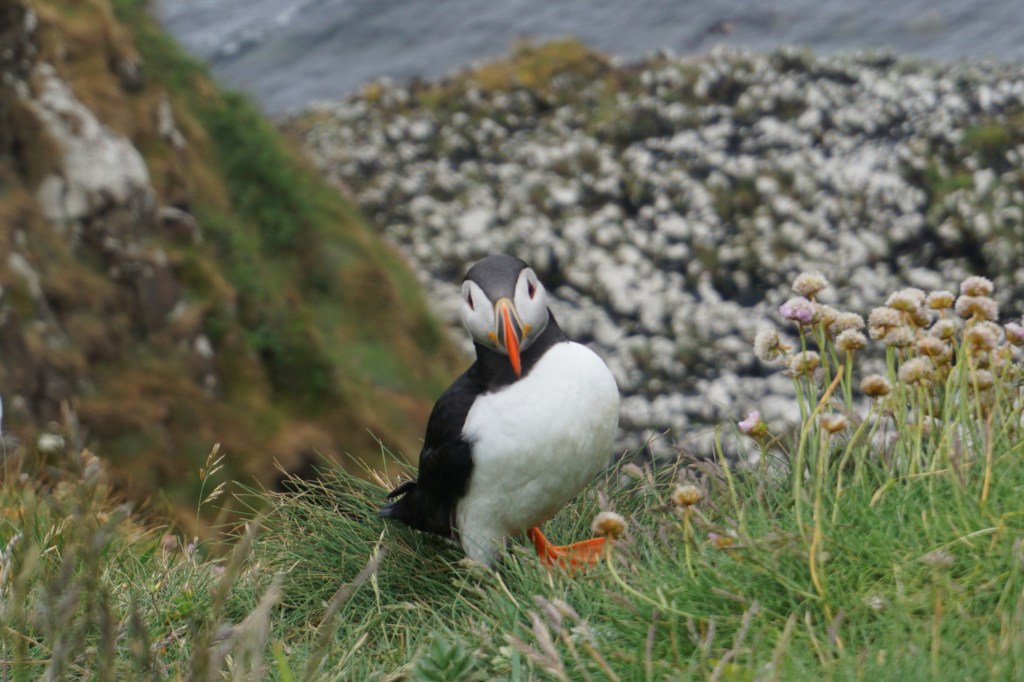
Standing on top of Staffa feels as if you are at the end of the world. On the North of the Island, you can walk on ground that has seldom been touched. Fresh. Untouched. Unaltered. Not yet damaged by the human race.
Wordsworth was underwhelmed with his trip to Staffa due to the crowds on the island; ‘We saw, but surely in the motley crowd’. Today it is hard to imagine the over-tourism he spoke off in his poem ‘Cave of Staffa’ amidst the island’s isolation. I’d like to think that since the National Trust took over the Island that tourist numbers are restricted and controlled to a sensible level but frankly, we live in a more populated world than Wordsworth did. As much as Staffa yearns you to seek solitude the sad truth is that isn’t possible here and that’s the way it should be.
Staffa will make you question many preconceptions, keeping you humble. The ruthlessness and power of nature can truly be felt. The rush of the water as you walk to the cave reminds you of the volatility of nature. These waves could easily engulf you; Everyone is vulnerable here. Yet it is humans that are causing real damage to the sea, to the wildlife, to the fauna. It’s hard to believe standing here, something as savage as this sea is endangered by us mere feeble humans.
To book your trip to the Isle of staffa: http://www.staffatours.com/

 Lucette Wood